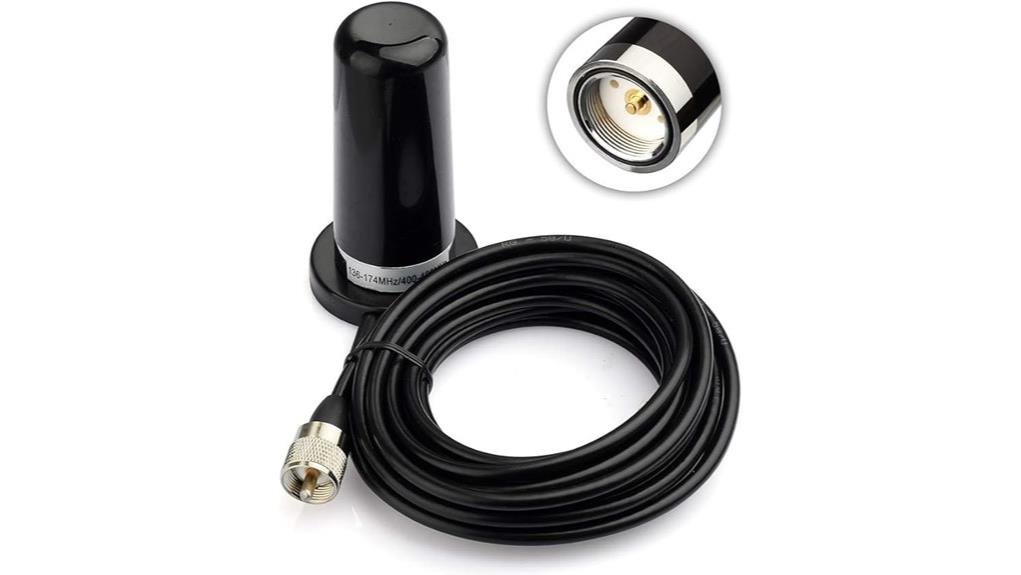
You’ll find the Bingfu vehicle mobile ham radio antenna is a low‑profile, dual‑band NMO/magnetic option covering 136–174 and 400–470 MHz, with a 50 Ω PL259 termination and 5 m RG58 lead. It delivers predictable VHF/UHF performance for handhelds and mobile rigs, modest gain, and standard power handling, but uses basic materials with limited front‑to‑back and long‑term weather resilience. It’s a budget, easy‑install choice for casual operators; continue for full installation and compatibility details.
Some Key Takeaways
- Dual-band coverage for 136–174 MHz (VHF) and 400–470 MHz (UHF), suitable for most mobile ham radios.
- Low-profile NMO or magnetic mount options make installation easy and discreet on vehicles.
- 50 Ω system with PL259 male connector, may require adapters for other radio connectors.
- Affordable, basic performance with modest gain and limited front-to-back and long-term weather resistance.
- Best for budget-conscious mobile users and casual hams, not for high-power or premium performance needs.
Quick Verdict: Is the Bingfu Vehicle Mobile Ham Radio Antenna Worth Buying?
While it doesn’t promise high-end performance, the Bingfu Vehicle Mobile Ham Radio Antenna delivers a practical, low-profile solution for VHF/UHF mobile use. You’ll find its price point attractive for budget installations, offering basic VHF/UHF coverage and simple NMO/magnetic mounting options. You should temper expectations: gain and front-to-back performance won’t match premium antennas, and durability concerns arise from minimal mass and light construction. Aesthetic fit is generally good for discreet installs, but long-term weather resistance is modest—expect possible corrosion or wear in harsh climates. If cost and concealment matter most, it’s a reasonable choice. Consider also selecting a compatible marine battery switch for reliable power management marine battery switch.
Packed Specs That Matter: Frequency, Connector, Mount and Cable Details
Because the antenna must match both your radio and installation, its core specs — frequency coverage, connector type, mount style and coax — determine real-world compatibility and performance. You get dual-band VHF 136–174 MHz and UHF 400–470 MHz on a 50 Ohm system, so radios expecting standard Cable impedance will interface correctly. The PL259 (UHF) male connector suits many mobile rigs but may need adapters for SO-239 or newer TNC/SMA ports. Mounting options include NMO mount and magnetic base; NMO durability is noted in the low-profile design. The supplied 5 m RG58/U cable balances flexibility and loss for mobile use. Consider handheld marine radio buyers’ needs for water resistance and simplified controls when choosing accessories like antennas handheld marine radios.
Real-World Performance: VHF/UHF Reception, Transmit Power and Range Expectations
If you expect reliable dual‑band mobile performance, this Bingfu antenna delivers predictable VHF/UHF reception and transmission within its specified 136–174 MHz and 400–470 MHz ranges. You’ll observe good signal clarity on both bands when matched to a 50 Ω radio and with minimal feedline loss over the supplied 5 m RG58. Expect urban coverage to be limited by line-of-sight obstructions and local noise; placement and installation height matter. Power handling is typical for mobile whip antennas—suitable for handhelds and mobile transceivers but not high‑power base amplifiers. Range follows expected FSPL behavior; don’t expect magical gains. For best results when integrating with marine systems, consider antenna choices optimized for boat radar and boating environments.
Installation and Compatibility Tips for Cars, Trucks, and Radios
When mounting the Bingfu QBFz008 on a vehicle, prioritize a solid NMO or magnetic ground plane and a short, direct feedline run to minimize SWR and feed loss. You should select mounting height to balance clearance and radiation pattern; higher often improves VHF/UHF performance but watch mast limits. Plan coax routing to avoid sharp bends, heat, and moving parts; secure with clamps and grommets. Guarantee RF grounding at the mount and chassis bonding points to reduce vehicle interference. Perform antenna tuning after installation with an analyzer or SWR meter. Verify compatibility with your radio connector and power handling. Also consider selecting an electrical panel or distribution solution to manage power and protections for your radio and accessories, as proper boat electrical panels help ensure safe, reliable installations.
Pros, Cons and Who Should Buy This Antenna
Although compact and affordable, the Bingfu QBFz008 delivers a practical balance of VHF/UHF coverage and straightforward vehicle installation that suits most mobile ham and two-way radio users. You’ll appreciate the low-profile NMO/magnetic mount options, 50 Ω impedance, and 136–174 / 400–470 MHz bandwidth for versatile mobile use. Pros: easy install, compatible connector/cable, acceptable performance for everyday comms, strong price point. Cons: basic materials, limited optimized gain versus premium antennas, marginal durability under heavy use—build quality is adequate but not ruggedized. Who should buy: budget-conscious operators, casual hams, and fleet users needing simple, functional mobile service. Consider pairing it with suitable transducer gear to better outfit boats and other vehicles for clear communications.
Some Questions Answered
Is the Antenna Waterproof or Weather-Resistant?
No, it isn’t fully waterproof, but it’s weather-resistant for typical mobile use. You’ll get adequate mounting durability from the NMO/magnetic base and low-profile design for rain and road spray. Corrosion resistance is limited by materials and connector seals, so you should protect exposed PL259 joints and cable ends with tape or sealant for long-term exposure. For continuous marine or submerged use, choose a purpose-built waterproof antenna.
Does It Support Dual-Band Simultaneous Operation?
No — it doesn’t support true dual-band simultaneous operation. You’ll need dual band switching or a duplexer to handle concurrent channels; the antenna is a single-feed NMO design covering VHF 136–174 MHz and UHF 400–470 MHz but it’s not configured for simultaneous transmit receive on both bands. For simultaneous use you’d run separate antennas or use proper RF combining/splitting equipment rated for 50 ohm and power handling.
Can the Cable Be Extended Safely Beyond 5 Meters?
Yes — you can extend the cable beyond 5 meters, but you’ll incur increased signal loss and must consider connector compatibility. Use low-loss coax (e.g., LMR-400) with proper UHF/PL259 adapters and minimize jumper count. Keep runs as short as practical, terminate and weatherproof connectors, and check SWR after installation. Expect reduced performance at VHF/UHF with long RG58 runs; replace with higher-spec cable if loss becomes unacceptable.
Is a Ground Plane Required for Optimal Performance?
No—you’re not strictly required to have a dedicated ground plane, but performance improves with one. The NMO/magnetic mount uses the vehicle chassis as the ground plane; mounting height and a solid conductive surface reduce RF nulls and improve VSWR, gain and pattern. If you mount on a non-metal roof or use long coax, add a counterpoise or dedicated ground plane and keep mounting height adequate to minimize body shielding for best results.
Are Replacement Parts or Spare Cables Available?
Yes. You can obtain replacement cables and spare connectors for this antenna. Third‑party vendors and many ham shops sell 5 m RG58/U replacement cables and UHF PL259 male spare connectors compatible with the NMO/magnetic base. You’ll want RG58 with 50 Ω impedance and quality PL259 crimp or solder fittings for minimal loss. Verify connector type and cable length before ordering to guarantee proper electrical and mechanical fit and maintain VSWR performance.


