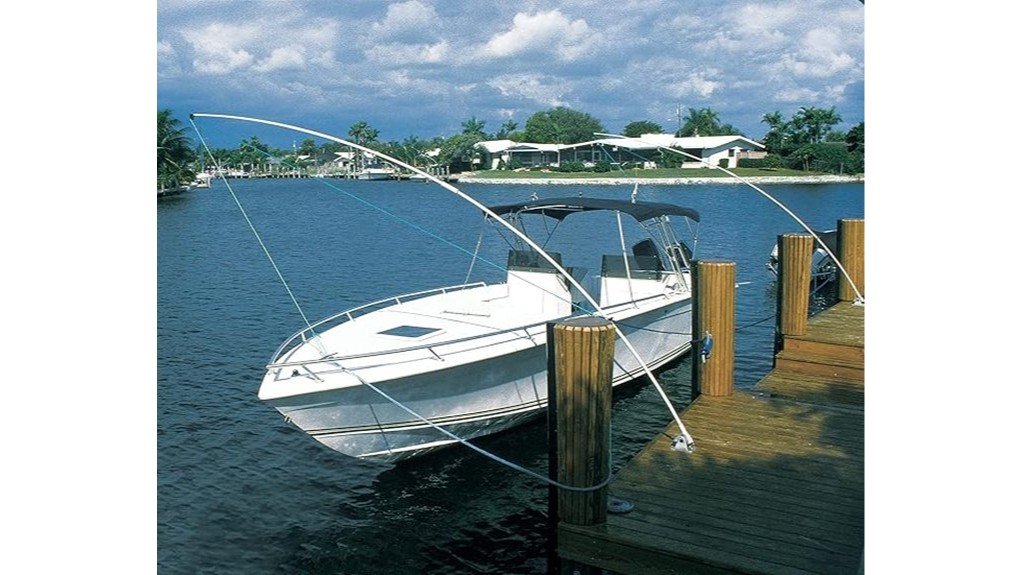
You’ll get a rugged, shock‑absorbing mooring whip that keeps your boat off the dock and isolates hulls from wakes, wind and tidal surge. Multi‑section fiberglass poles flex under load and resist corrosion; a rocker‑arm base pivots to prevent snap‑backs; a low‑friction tip and whip cleat smooth line run and retrieval. It’s sized for 33’–56′ boats with 20,000–48,000 lb ratings, ideal for crews focused on dockside protection—keep going to see detailed fit and limitations.
Some Key Takeaways
- Robust fiberglass poles and rocker-arm base absorb shocks, reducing hull stress during wakes and tidal surges.
- Low-friction tip and whip cleat enable smooth line run and quick, ergonomic retrieval under load.
- Rated capacities (20,000–48,000 lb) suit 33’–56′ boats when matched to hull displacement and length.
- Corrosion-resistant fittings and materials perform well in saltwater but require periodic maintenance.
- Best for recreational owners wanting durable dock protection; consider alternatives for smaller or budget needs.
How the Taylor Made Premium Mooring Whip Works and Who It’s For
Think of the Taylor Made Premium Mooring Whip as a shock-absorbing extension that keeps your boat off the dock: its sturdy fiberglass pole and rocker-arm base hold the boat away from pilings while the low-friction tip and whip cleat let lines run and retrieve smoothly. You’ll use it to isolate hulls from wakes, absorb surge, and maintain consistent anchor alignment so mooring loads stay predictable. It’s aimed at owners and crews on 33’–56′ boats who want reliable protection in severe conditions. You’ll integrate it into routine crew training, assign clear roles, and trust the whip to reduce damage and stress. Many boaters also pair mooring whips with other essential dock line gear like fenders and quality lines to create a complete protection system Essential Dock Line Gear.
Key Construction Features: Fiberglass Poles, Rocker Arm Base, Low‑Friction Tip, and Whip Cleat
Having covered what the mooring whip does for your boat, let’s look at how its components make that performance possible. You’ll appreciate the multi-section fiberglass poles: they deliver fiberglass durability, flex under load, and resist corrosion so the whip stays reliable. The rocker arm base mounts solidly to the dock, letting the whip pivot and absorb shock instead of transferring force to your cleats. A low-friction tip reduces wear on lines and eases movement in surges. Finally, the whip cleat features thoughtful cleat ergonomics for quick, secure retrieval and boarding, making operation intuitive for everyone aboard. Taylor Made’s reputation for boat mooring gear means you’re getting products designed specifically for boating needs.
Performance in Real Conditions: Wind, Wakes, Tides, and Saltwater Durability
Usually you’ll notice the difference in rough conditions, where the Taylor Made Premium Mooring Whip keeps your boat off the dock and absorbs shocks from wind, wakes, and tidal movement. You’ll feel controlled deflection during heavy wakes and steady, forgiving movement with shifting tides. Tested in storm testing scenarios, the whip maintains position without harsh snap-backs. Fiberglass strength and low-friction tip smooths load transfer so your cleats and lines last longer. For saltwater use, corrosion resistance on fittings and the rocker arm base prevents premature wear. You’ll trust it to protect your boat and join other owners who rely on it. These features make it one of the top choices for dock line holders for many boaters.
Fit and Capacity: Sizing for 33’–56′ Boats and 20,000–48,000 Lb Ratings
When you pick a Taylor Made Premium Mooring Whip, match its length and rated capacity to your boat’s dimensions and displacement so the whip can absorb forces without overstressing fittings. You’ll choose within the 33’–56′ range and 20,000–48,000 lb ratings to guarantee proper size matching. Assess your hull length, weight, and typical dock loads; pick a whip that keeps the boat off the dock while keeping cleats and bases within their working limits. Proper selection optimizes load distribution along the pole and through your mooring points, increasing reliability and giving you confidence to share tips with fellow boaters. Also consider the variety of available mooring line products and accessories to complement the whip and improve overall dock security with essential mooring line tips.
Buying Verdict: Strengths, Limitations, and When to Choose This Mooring Whip
Although no single product fits every berth, the Taylor Made Premium Mooring Whip gives you dependable protection for larger boats by combining sturdy fiberglass poles, a rocker-arm base, and a low-friction tip that keeps your hull off the dock in heavy wakes and strong winds. You’ll appreciate its engineered reliability and clear long term value if you own a 33’–56′ boat. Limitations include size suitability and the need for periodic upkeep; follow simple maintenance tips and keep proper installation tools on hand. Choose this whip for durable dockside security; consider alternative products if you need smaller, budget, or lightly loaded options. The product is ideal for boaters who prioritize reliable dock protection for recreational and pleasure craft, as emphasized by the Anchor Gear Guide’s focus on boat anchors.
Some Questions Answered
How Difficult Is Installation for a Single Person?
You’ll find installation manageable alone; Easy setup and Solo mounting are realistic if you plan. Start on a calm day, gather tools, and position the rocker arm base securely on the cleat or deck pad. You’ll lift the fiberglass pole into the base, snap the low-friction tip and secure the whip cleat. Follow torque recommendations and test with light load first. You’ll feel confident joining other boaters who trust this system.
Can It Be Used With Swim Platforms or Non‑Standard Cleats?
Yes — you can use it with swim platforms and many non‑standard cleats, though you’ll want to verify swim plate compatibility and fit with custom cleats before mounting. You’ll inspect attachment points, make certain strong backing, and use suitable hardware or adapters for unconventional cleat shapes. If you’re unsure, consult a fitter or the manufacturer; they’ll help you join other boaters in confident, secure installation and reliable mooring protection.
Are Replacement Parts (Tips, Cleats) Available Separately?
Yes — you can get replacement tips and mounting adapters separately. You’ll be able to order low‑friction tip replacements and whip cleat parts without buying a whole whip, plus mounting adapters to fit different cleats or swim platforms. Check authorized dealers or Taylor Made’s parts catalog for compatible pieces and part numbers. If you’re unsure which adapter suits your setup, contact support so you and other boaters get the right fit.
Does It Affect Nearby Boats When Deployed in Crowded Slips?
Not usually — you’ll minimize wake interference and respect dock etiquette by angling the whip so your boat sits away from neighboring slips. Position the rocker arm and low-friction tip to keep lines clear, and retrieve via the whip cleat when boarding to avoid swinging. In crowded marinas, you’ll check spacing first, communicate with neighbors, and adjust placement so your mooring protects your boat without encroaching on others.
Is There a Recommended Maintenance Schedule for Long‑Term Saltwater Use?
Yes — you should do annual inspections and follow seasonal storage routines. Check fiberglass poles, rocker arm, low‑friction tip and cleat for corrosion or wear after each season; rinse with fresh water after salt exposure and lubricate moving parts. Before winter or long layups, dry thoroughly, pack in breathable cover, and store off the deck. You’ll keep fellow boaters reassured and extend reliable mooring protection for years.